


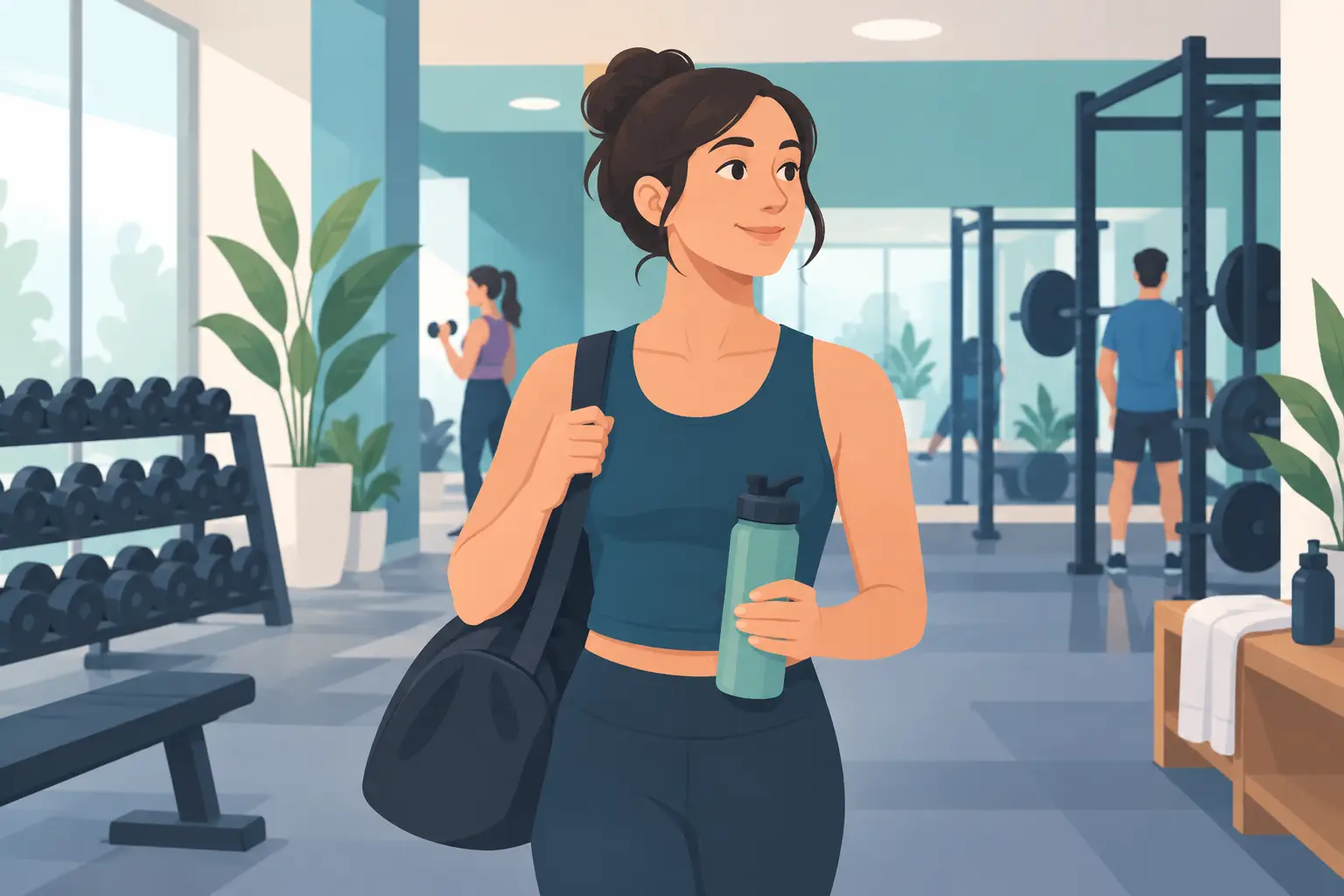
How to Reduce Gym Anxiety and Feel at Home
You have changed into your gym clothes, parked outside, and suddenly the hardest part is opening the door. If you are wondering how to reduce gym anxiety, start by knowing this: feeling nervous does not mean you do not belong there. It usually means you are doing something unfamiliar, in a place where you assume everyone else knows exactly what they are doing.
Most people do not. Even experienced gym members had a first session, a first attempt at a squat rack, and a moment of wondering whether they were using a machine correctly. The aim is not to become fearless overnight. It is to make the gym feel familiar enough that you can focus on the reason you came in the first place: looking, feeling and performing at your very best.
Why the Gym Can Feel Intimidating
Gym anxiety can come from several places at once. You may worry about being watched, not knowing what equipment to use, feeling less fit than other people, or arriving at a busy time when every station appears taken. For busy parents, shift workers and commuters, there can also be pressure to make a limited session count. That pressure can turn a positive plan into something that feels like a test.
Social media does not always help. Perfectly edited workouts can make it seem as though everyone trains with confidence, technical knowledge and endless motivation. Real training is much less polished. People pause between sets, adjust their plan, ask questions and have sessions that feel harder than expected.
A good gym environment makes a genuine difference, but confidence also grows through repetition. Your first goal is simply to lower the barrier to showing up.
How to Reduce Gym Anxiety Before Your First Session
Preparation gives your mind fewer unknowns to fill with worst-case scenarios. Decide what time you are going, what you will wear and what your session will involve before you leave home. Comfortable clothes, a water bottle and a simple plan are enough. You do not need specialist kit or an advanced programme to get started.
If crowds make you anxious, choose a quieter time where possible. One advantage of 24/7 access is that you can train around your own schedule rather than forcing yourself into the busiest after-work rush. An early morning, later evening or mid-afternoon visit may give you more space to get comfortable with the layout and equipment.
It can also help to make your first visit deliberately short. Tell yourself you are going in for 20 minutes, not committing to an exhausting workout. Walk around, use a treadmill or bike, try a few familiar movements and leave while you still feel positive. A short session you repeat is far more valuable than an ambitious session that makes you avoid returning.
Give yourself a simple first-session plan
Uncertainty is often more stressful than exercise itself. Instead of wandering from station to station, use a straightforward full-body session that does not require complicated set-ups. For example, spend five minutes walking or cycling, then choose one lower-body machine, one upper-body pushing machine, one pulling machine and a few minutes of gentle stretching.
Keep the weights light enough to practise the movement. The point is not to impress anybody or leave exhausted. It is to learn where things are, notice what feels comfortable and finish knowing you followed through.
Write the plan in your phone if that helps. When you arrive, you will have something to refer to rather than trying to remember what comes next. After two or three visits, adjust it based on what you enjoyed and what supports your goals.
Stop Assuming Everyone Is Watching
This is one of the most common worries, and it feels very real. The truth is that most people at the gym are concentrating on their own session, their next set, their music or how quickly they can get home afterwards. They are unlikely to be judging a beginner for learning.
You may notice someone looking in your direction, but that does not automatically mean criticism. In a shared training space, people naturally look around between sets. A friendly glance, someone waiting for a machine or a trainer checking the room are all normal parts of gym life.
Try swapping the question, “Do I look like I know what I am doing?” for “What is the next useful thing I can do?” That may be adjusting your seat, completing another repetition or taking a drink of water. Bringing your attention back to one action interrupts the spiral of self-conscious thoughts.
Headphones can help some people feel more settled, particularly during cardio or when training alone. But do not use them as a reason to avoid asking for help when you need it. A quick question can save you from spending 20 minutes worrying about a machine.
Ask for Guidance Early, Not After Weeks of Worrying
There is no prize for figuring everything out alone. Asking a trainer or member of staff how to set up a station, choose a starting weight or structure a session is a sensible part of training safely. Good guidance removes guesswork and can help you make progress sooner.
Personal training can be particularly useful if anxiety comes from not knowing what to do. A programme built around your experience, schedule and goals gives you a clear reason for every exercise. It also helps you learn good technique without feeling you have to copy what somebody else is doing.
At Failsworth Fitness 24/7, the focus is on individual support rather than leaving members to fend for themselves. Whether your aim is general fitness, strength, fat loss or simply feeling more comfortable in the gym, a conversation about where you are starting from is always worthwhile.
Classes can make the first step easier
For some people, a class is less intimidating than training alone because the structure is already there. You know when to arrive, what the session is focused on and when it finishes. There is no need to plan every exercise yourself.
Classes are not the right answer for everyone. If being in a group makes you more anxious, begin with a quiet solo workout or a one-to-one session instead. The best approach is the one you will repeat consistently, not the one that looks most confident from the outside.
Build Confidence Through Small Evidence
Gym confidence is not a personality trait. It is evidence your brain collects over time: you went in, you completed the plan, nothing terrible happened, and you managed a little more than last week. Track those wins, even when they seem small.
Your first milestones might be attending twice in one week, using a new piece of equipment, increasing a walk from 10 to 15 minutes or walking through the door without sitting in the car park first. These are real signs that the gym is becoming part of your routine.
Avoid comparing your beginning with another person's middle. The person lifting heavy weights may have trained for years, while your work, sleep, injury history and goals are completely different. Progress is personal. Consistency, sensible training and recovery will take you further than trying to match somebody else's session.
Nutrition can support your confidence too, especially if rushed days make you feel underprepared. Having a balanced meal before or after training, or arranging a convenient calorie-counted meal option, can reduce one more decision from your day. However, do not wait for a perfect food plan, perfect outfit or perfect level of motivation before you start.
What to Do When Anxiety Hits at the Gym
Even with preparation, some sessions will feel uncomfortable. On those days, make the task smaller. Walk in, go to the stretch area, spend five minutes on a cardio machine and decide what to do next. You are allowed to change your plan.
Slow your breathing and use a practical statement: “I only need to do the next five minutes.” Anxiety often pushes you to imagine the entire workout going badly. A five-minute commitment is easier to manage, and it often creates enough momentum to continue.
If the gym is unexpectedly busy, choose an alternative rather than seeing it as a failed session. Use a different machine, complete a bodyweight movement in the functional area, or focus on cardio and return to your original plan next time. Flexibility is a training skill, not a compromise.
If anxiety is affecting other parts of your life, causing panic symptoms or stopping you from doing things you value, it is worth speaking to a qualified health professional. The gym can support wellbeing, but you do not have to handle persistent anxiety on your own.
The door will feel easier to open each time you do it. Give yourself permission to be new, take up space and learn at your own pace. Your fitness journey does not need to look impressive on day one. It only needs to begin.


Comments